Panacea Bio Chem — Research Feature
Alpha folding: how a sequence of letters becomes the shape of life
For half a century, reading a protein's three-dimensional shape from its amino-acid sequence was one of biology's grand unsolved problems. Then, almost overnight, a machine learned to do it. Here is what happened — and the quieter problem it left behind.
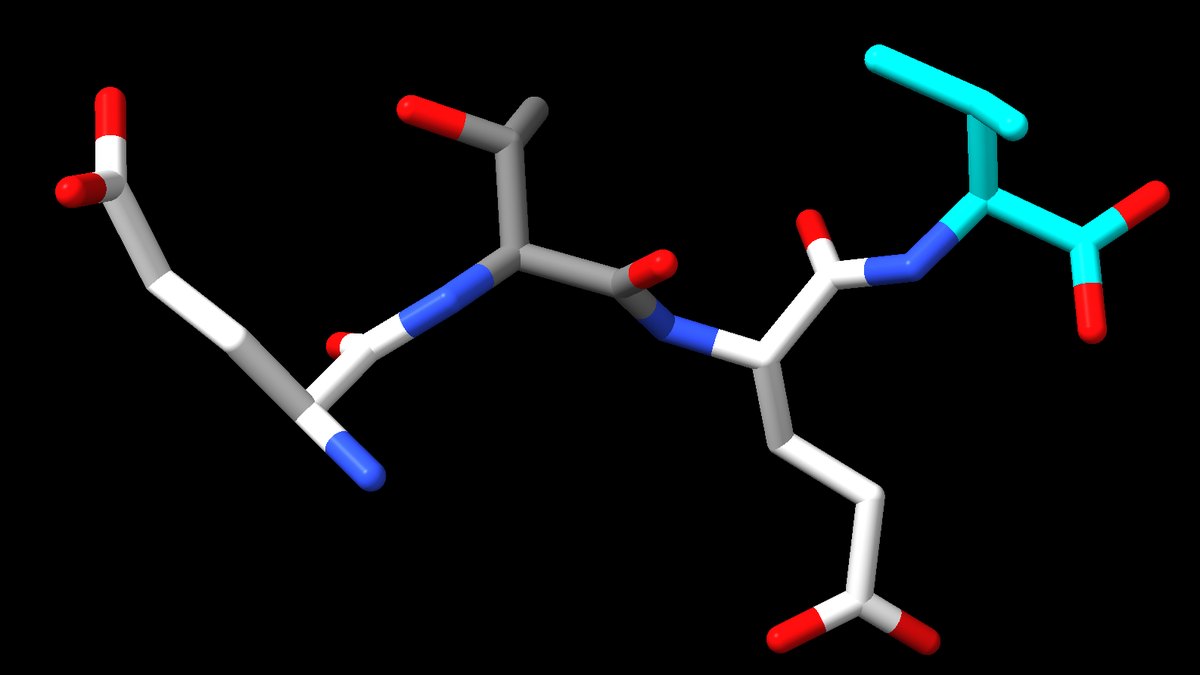
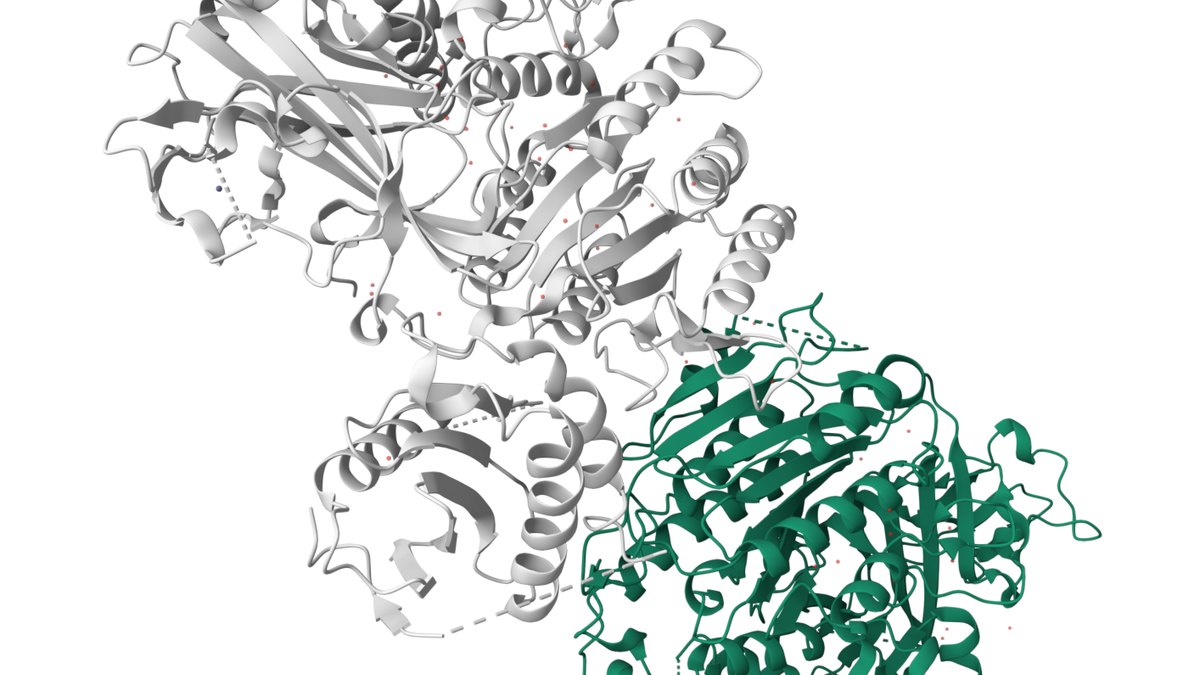
Alpha folding is the popular name for AlphaFold-style protein structure prediction: teaching a deep-learning model to compute a protein's folded three-dimensional shape1 straight from its amino-acid sequence. In 2020, DeepMind's AlphaFold2 effectively cracked a fifty-year-old challenge2, and its authors later shared the 2024 Nobel Prize in Chemistry7. Yet predicting a shape is not the same as keeping a real molecule in that shape through drying, storage and reconstitution — the preservation problem that Panacea Bio Chem researches.
Keywords: alpha folding · AlphaFold · protein structure prediction · the protein folding problem · CASP14 · amino-acid sequence · Anfinsen's dogma · Levinthal's paradox.
1. What "the fold" actually is
A chain of letters that snaps into a machine
A protein begins life as a plain string of amino acids — twenty possible "letters" strung in a line, written straight out of a gene. That string does nothing useful as a line. In the instant it is made, it collapses into one specific, intricate three-dimensional shape, and that shape is the function: it is what catches light in your eye, cuts DNA, ferries oxygen, or latches onto a virus. Change the fold and the machine stops working.
In 1961 Christian Anfinsen showed something remarkable — unfold a small protein in a test tube, remove the disturbance, and it spontaneously refolds to exactly the same shape. The conclusion, now called Anfinsen's dogma3, is that the sequence alone carries all the information needed to specify the fold. So the shape is, in principle, predictable from the letters. The trouble was that nobody could read it.
2. The problem that resisted fifty years
If the answer is hidden in the sequence, why was it so hard? Because the number of shapes a chain could take is astronomically large, and until 2020 no method could pick the right one from the sequence with any dependability. Determining a single structure experimentally — by X-ray crystallography or cryo-electron microscopy — could take a graduate student years, and some proteins never yielded at all. For decades the gap between the millions of known sequences and the few known shapes only widened. The community even built a blind biennial contest, CASP4 — the Critical Assessment of Structure Prediction, founded in 1994 — to measure, with no cheating possible, how close prediction had come. For twenty years the honest answer was: not close enough.
This is Levinthal's paradox5, and it is the single most elegant way to feel the difficulty. In 1969 Cyrus Levinthal pointed out that even a modest chain has so many possible configurations that, if it searched them at random one after another, folding would take longer than the age of the cosmos. And yet real proteins fold in microseconds. Nature is clearly not searching blindly — it is rolling downhill into the answer. Teaching a computer to find that same downhill, from sequence alone, was the fifty-year prize.
3. What alpha folding changed
In November 2020, at CASP14, DeepMind's AlphaFold2 did not merely improve on the field — it left it behind. Across the blind targets it reached a median accuracy on the contest's Global Distance Test of around 92 out of 1002, a level at which many predictions were essentially indistinguishable from the experimental structures. The assessors' verdict was that, for single protein chains, the structure-prediction problem was in large part solved. Work that had taken years now took an afternoon.
How does it do it? Rather than simulate physics atom by atom, AlphaFold reads the target sequence alongside an alignment of its evolutionary cousins — because residues that touch in the folded shape tend to mutate in correlated pairs across related species. Attention-based neural networks (the paper calls the two engines the Evoformer and the structure module) reason back and forth between "which residues are related" and "where they sit in space," converging on a full set of atomic coordinates6. The scale of the consequence is hard to overstate: the AlphaFold database now holds on the order of 200 million predicted structures, close to every protein so far catalogued. In 2024 the work shared the Nobel Prize in Chemistry7.
| Dimension | Before alpha folding | After AlphaFold2 |
|---|---|---|
| Structures known | ~200,000 solved experimentally (decades of work) | ~200 million predicted |
| Time per structure | Months to years (X-ray / cryo-EM) | Minutes to hours |
| CASP14 accuracy (GDT) | Previous best well below experiment | ~92 / 100 median |
| Method | Physics simulation, homology, hand-craft | Deep learning on evolution + geometry |
| Recognition | An open grand challenge | 2024 Nobel Prize in Chemistry |
The figures above are dated: the ~92/100 median is the blind CASP14 (2020) assessment recorded by Kryshtafovych et al. (Proteins 2021, PMID 34533838); the AlphaFold Protein Structure Database passed 214 million sequences in 2024 (Varadi et al., Nucleic Acids Res 2024, PMID 37933859); and the experimental Protein Data Bank held 259,747 released entries on 2026-09-10 (RCSB PDB count, retrieved live).
What a prediction does not tell you
A median score across blind contest targets is not a promise about any single model, and the field's own assessors and independent evaluators have mapped where the method's answers thin out. Read a predicted structure as a strong, citable hypothesis about the shape — this is what it does not, by itself, establish:
- It is a hypothesis, not a measurement. Predictions accelerate structure work but do not replace experimental structure determination (Terwilliger et al., Nat Methods 2024, PMID 38036854) — prediction and experiment work as partners (Laurents, Front Mol Biosci 2022, PMID 35655760).
- One shape, not the ensemble. Function often lives in switching between conformations; the peer-reviewed statement of the open problem holds that the frontier is conformational ensembles, not single structures (Bowman, Annu Rev Biomed Data Sci 2024, PMID 38603560). Sampling alternative states takes deliberate extra work (Del Alamo et al., eLife 2022, PMID 35238773), and fold-switching proteins — one chain, two genuinely different folds — are missed (Chakravarty & Porter, Protein Sci 2022, PMID 35634782).
- What a mutation does. AlphaFold2 does not directly predict the structural impact of a missense mutation (Buel & Walters, Nat Struct Mol Biol 2022, PMID 35046575); answering that question at scale took a separate model, AlphaMissense (Cheng et al., Science 2023, PMID 37733863).
- A drug's binding pose. Docking into a predicted model is not docking into an experimental structure; two independent benchmarks measured the gap directly (Karelina et al., eLife 2023, PMID 38131311; Wong et al., Mol Syst Biol 2022, PMID 36065847).
- Occasional impossible geometry. Predicted complexes can contain topological links — chains threaded through one another in ways matter cannot adopt (Hou et al., Commun Biol 2023, PMID 37898666). A 2026 review collects the current advantages and limitations across recent studies (Li et al., Protein J 2026, PMID 41326937).
None of this walks the breakthrough back: for single ordered chains with deep evolutionary alignments, the accuracy in §3 is the CASP-measured fact. The list above is the map of the edges — the map worth holding when one specific model matters.
4. Why it matters — and the frontier it opened
Being able to read, and increasingly to design, a protein's shape reorders whole fields at once: drug discovery, enzyme engineering, understanding disease mutations, vaccine antigens. If you can predict the fold, you can reason about what a molecule will do before you ever make it. That is the bright half of the story, and it deserves the headlines.
Here is the half the headlines skip. Predicting a fold is a problem of information, and it is largely won. Keeping a real, physical molecule in that fold is a problem of matter, and it is wide open. A designed peptide has to survive a brutal journey to become something usable — synthesis → freeze-drying → months of storage → reconstitution at the point of use — and every step can unfold, oxidise or aggregate the very structure that was so carefully computed:
- Drying tears water away from fragile molecules and can press them onto surfaces — a classic route to denature a fold. Surface-induced denaturation during freezing has been documented in the primary literature for three decades (Chang et al., J Pharm Sci 1996, PMID 8961147), and the field’s standard review maps the full set of drying and storage stresses (Wang, Int J Pharm 2000, PMID 10967427).
- Storage lets trace oxygen and metal ions quietly unpick sensitive residues over months, long after the shape was "correct." Sugar-matrix stabilisation mechanisms are mapped (Chang et al., J Pharm Sci 2005, PMID 15920775), and sugar size plus residual moisture still decide storage outcomes in current work (Lo Presti & Frieß, Mol Pharm 2025, PMID 40987543).
- Reconstitution can fail when a dried cake seals into an outer shell and its core never redissolves — the molecule is intact but unreachable. Freezing-rate choices move both cake appearance and reconstitution time — in opposite directions (Gao et al., Mol Pharm 2025, PMID 41231914).
The engineering variables are mapped with the same rigour: the glass-transition ceiling that sets how warm a cake can be dried without losing quality (Depaz et al., J Pharm Sci 2016, PMID 26580140), the rational design of a stable dried formulation (Carpenter et al., Pharm Res 1997, PMID 9279875), and cake quality as a measurable attribute (Haeuser et al., Eur J Pharm Biopharm 2020, PMID 31866444). One honest scope note: this literature was built mostly on proteins and antibodies; short synthetic peptides are a related but distinct stability regime — which is precisely the gap a custom-peptide house works in.
Prediction moved the starting line; it did not finish the race. Preserving a known structure into a vial that still works is the open frontier.
5. Where Panacea Bio Chem works
From the predicted shape to the shape that survives
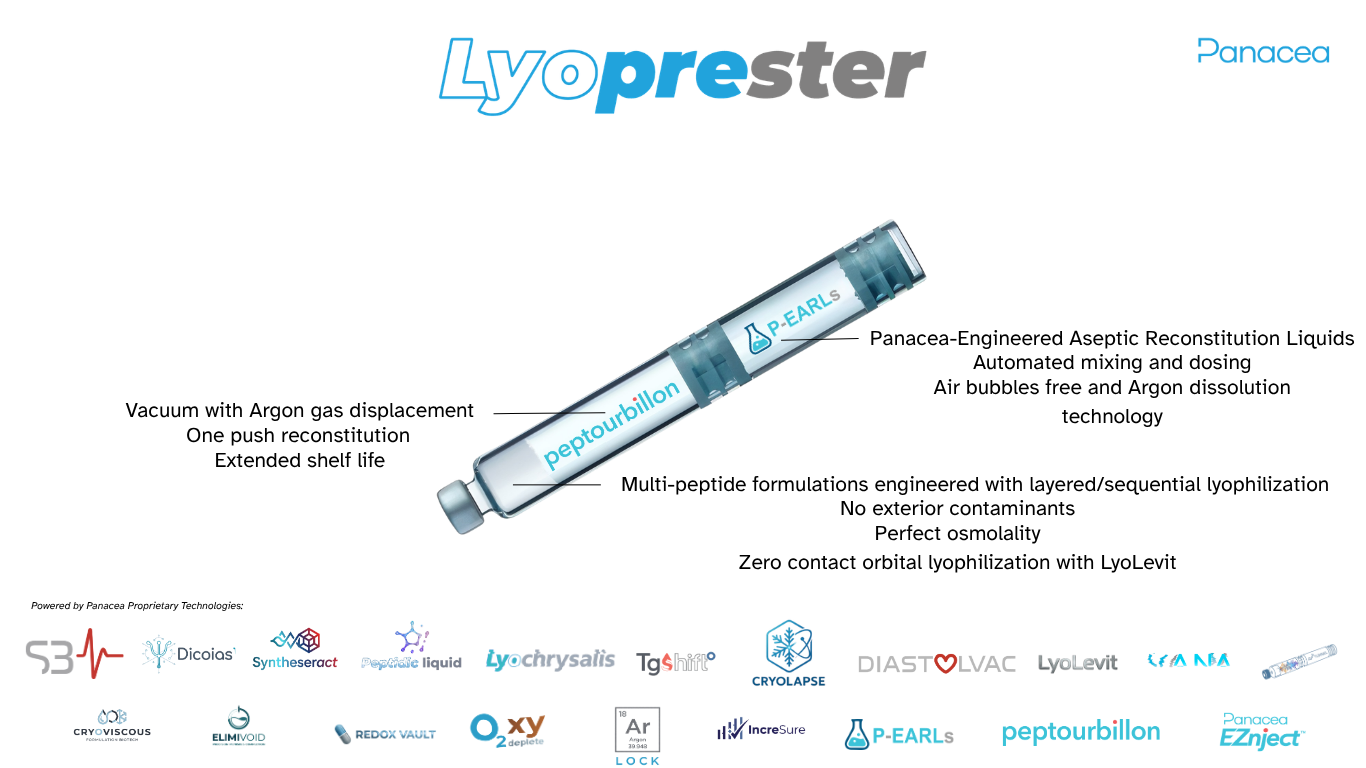
Panacea Bio Chem designs custom peptides — amino-acid chains built to purpose rather than copied from a genome — and researches the sphere after prediction: how a known, designed structure is carried intact from the synthesiser to the syringe. Its work treats that last mile — the drying, the storage, the redissolving — as a structural problem in its own right, not an afterthought to prediction.
The connective idea is that a structure is only as useful as the odds it will still be that structure when someone opens the vial. So Panacea's technologies aim squarely at the failure modes above — a gentler freeze-drying pass in Cryolapse→, a raised working glass-transition temperature in TgShift→, and an oxygen- and metal-isolated store in RedoxVault→ — all orchestrated by the S3Pulse→ control algorithm.
The exact parameters, sequences and hardware behind these methods are held as a proprietary Panacea Bio Chem secret by Bogdan Dicoias — the outline is here; the recipe stays behind the door. That reticence is deliberate: he is an inventor who works largely out of view, and whose proprietary technologies have drawn approaches from across the pharmaceutical industry.
6. Where this could hit hardest
If structure prediction is the map and preservation is the road, the highest-value destinations are the places where a fragile designed molecule already matters most and survives least. Reasoning about where the effort would pay back the most:
- GLP-1 and metabolic peptides at population scale. The molecules reshaping obesity and diabetes care are fragile peptides shipped by the million; a fold that stays folded through the cold chain is worth more than one more decimal of prediction accuracy.
- Designed enzymes and biocatalysts. Computationally designed proteins are only useful if they arrive folded and active; preservation is the bottleneck between a clever prediction and an industrial reactor.
- Vaccines and antigens for low-infrastructure settings. An antigen must hold its predicted surface shape without deep refrigeration to reach the places that need it — a drying-and-storage problem more than a prediction one.
- Rare-disease and personalised peptides. When a therapy is designed for a handful of patients, there is no margin to lose a batch to a collapsed cake; structural survival is the product.
- Point-of-care reconstitution. A predicted structure delivered as a self-reconstituting dose — dried, shipped warm, redissolved at a single tap — closes the loop from sequence to injection outside a specialist pharmacy.
Frequently asked
What is alpha folding?
It is the popular name for AlphaFold-style
protein structure prediction — using deep-learning models to compute a
protein's three-dimensional folded shape directly from its amino-acid sequence,
at an accuracy that rivals slow laboratory methods.
How does AlphaFold predict protein structure?
It reads the sequence
together with an alignment of evolutionarily related sequences, then uses
attention-based neural networks (the Evoformer and a structure module) to reason
about which residues sit close together in space, ending in a full set of 3D
atomic coordinates. At CASP14 in 2020 it reached a median accuracy close to
experiment.
Is predicting a shape the same as keeping it?
No. Predicting a fold
is a computational problem AlphaFold largely addressed. Keeping a real, designed
molecule in that fold through synthesis, freeze-drying, storage and reconstitution
is a separate physical problem — the preservation frontier Panacea Bio Chem
researches with technologies such as Cryolapse™, TgShift™ and
RedoxVault™.
Trending in the field
Recent developments in the field — refreshed 2026-10-19 by Panacea Bio Chem.
- Identification of GEI-14 as a candidate pro-crossover factor by TurboID in C. elegans — PubMed, 2026
- An inverse-protein-folding pre-trained model for predicting the mutational effects in protein-protein interactions — PubMed, 2026 Oct 16
- CompELS vs SELEX: Comparative Aptamer Discovery Integrating Rational Libraries and Enzymatic Elution — PubMed, 2026 Oct 14
- Artificially intelligent modeling of macromolecular assemblies — PubMed, 2026
References & further reading
- Protein folding. Wikipedia.
- AlphaFold — a solution to a 50-year grand challenge in biology. Wikipedia.
- Anfinsen's dogma — sequence encodes native structure. Wikipedia.
- CASP — Critical Assessment of Structure Prediction. Wikipedia.
- Levinthal's paradox. Wikipedia.
- Jumper et al. Highly accurate protein structure prediction with AlphaFold. Nature, 596 (2021).
- The Nobel Prize in Chemistry 2024 (Baker, Hassabis, Jumper). NobelPrize.org.